
What to know about Cocamidopropyl Betaine (CAPB), coconut-derived ingredients, and sensitive scalps
You switch to a “gentle” shampoo.
Maybe it says sulphate-free, natural, or suitable for sensitive skin on the bottle. You expect your scalp to feel better — but the itching, redness or flaking continues.
 So what is going on?
There are many possible causes of scalp irritation, but one ingredient worth knowing about is cocamidopropyl betaine (CAPB) — a widely used cleansing and foaming ingredient found in shampoos, body washes, facial cleansers and other personal-care products.
Despite its association with gentle formulations, CAPB has a well-documented history as a contact allergen in some individuals.
Understanding what it is — and learning how to recognise it on an ingredient label — can be particularly useful for people who seem to react to one shampoo after another.
What is Cocamidopropyl Betaine?
Cocamidopropyl betaine, usually shortened to CAPB, is a surfactant commonly associated with coconut-derived raw materials.
Surfactants help water mix with oils and dirt so they can be rinsed away. CAPB also produces a soft, pleasant foam and is generally considered milder than some traditional cleansing agents.
This helped make it extremely popular as consumers began looking for alternatives to stronger sulphate-based cleansers.
Today, CAPB can be found in many products marketed as:
- sulphate-free
- gentle
- natural
- sensitive-skin friendly
- baby-friendly
- eco-conscious
And that creates an interesting contradiction: an ingredient chosen partly for its mildness can still cause allergic contact dermatitis in susceptible people.
An Allergen Dermatologists Have Known About for Years
CAPB is not a newly discovered concern.
In 2004, the American Contact Dermatitis Society named cocamidopropyl betaine its “Allergen of the Year” — a designation intended to draw attention to allergens with significant clinical relevance.
Research has since continued to examine CAPB and its role in allergic contact dermatitis.
However, there is an important detail that often gets lost when CAPB is discussed online:
CAPB itself may not always be the main problem.
Research suggests that reactions associated with CAPB can be caused by impurities left behind during its manufacturing process, particularly amidoamine (AA) and 3-dimethylaminopropylamine (DMAPA).
The amount of these impurities can vary depending on how the ingredient is manufactured and purified.
This may help explain why someone can apparently tolerate one CAPB-containing product but react to another.
What Can a CAPB Reaction Look Like?
An allergic contact reaction does not necessarily appear immediately after using a shampoo.
It can present as persistent or recurring irritation, including:
- itching
- redness
- flaking
- scalp irritation
- irritation around the hairline or behind the ears
- dermatitis affecting the face, eyelids or neck
Because these symptoms can have many different causes, they can easily be mistaken for dandruff or another scalp or skin condition.
Having an itchy or sensitive scalp does not mean that you are allergic to CAPB.
If you suspect an allergy or contact sensitivity, the appropriate way to investigate it is through patch testing with a dermatologist rather than trying to diagnose the cause yourself.
“Natural” Doesn’t Automatically Mean Non-Irritating
At Conscious Living, this is something we believe is important for consumers to understand.
The words natural, organic, clean, sulphate-free and gentle can tell you something about how a product has been formulated or positioned — but they don’t guarantee that every ingredient will suit every person.
Coconut-derived ingredients are a good example.
As consumers moved away from certain conventional surfactants, coconut-derived alternatives became increasingly common in natural personal-care formulations.
That means someone searching specifically for a “natural” or “gentle” shampoo may still encounter CAPB and other coconut-derived ingredients.
Natural describes where something comes from. It doesn’t mean that nobody can be sensitive to it.
Even plants and naturally derived substances contain biologically active compounds, and individual skin responses vary enormously.
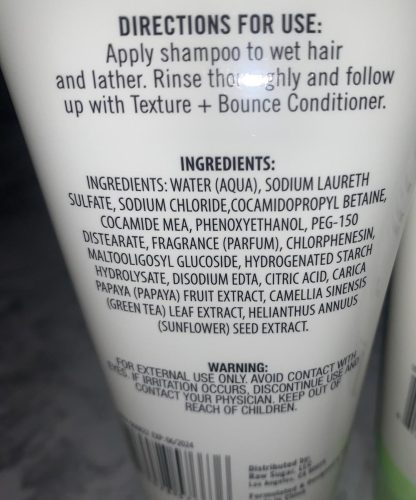
How to Read Your Shampoo Label
If you and your dermatologist are investigating a possible CAPB sensitivity, the most obvious name to look for on an ingredient list is:
Cocamidopropyl Betaine
You may also encounter related ingredient names such as:
- Cocamidopropyl Hydroxysultaine
- Cocoamidopropyl Betaine
- Coco Betaine
Other ingredients used in personal-care formulations can also be derived from coconut, including coco glucoside, sodium coco sulphate, caprylic/capric triglyceride, lauric acid and certain other surfactants and emollients.
There is another complication: the ingredient label may not tell you the original plant source of every ingredient.
The same type of ingredient may sometimes be manufactured from different feedstocks.
So if avoiding coconut-derived ingredients is important to you, reading the INCI ingredient list may not always provide the complete answer. You may need to ask the manufacturer directly about the origin of individual ingredients.
A company that understands its raw materials and supply chain should be able to give you a clear answer.
A Different Way to Cleanse Hair: Soapnut
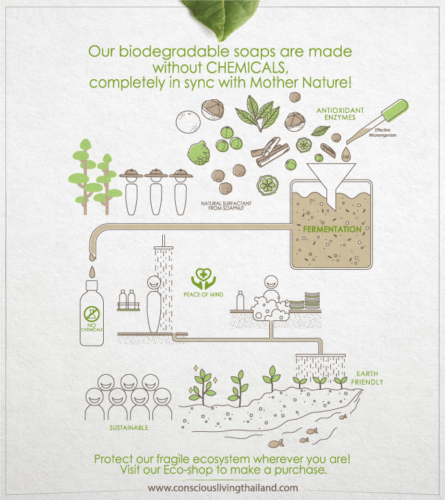
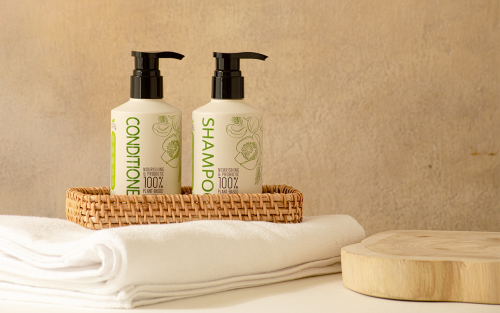
When developing our haircare at Conscious Living, we took a different approach to the cleansing system. Instead of relying on cocamidopropyl betaine, our shampoo and conditioner formulations use soapnut as the primary cleansing agent.
Soapnut naturally contains saponins — plant compounds with cleansing and foaming properties.
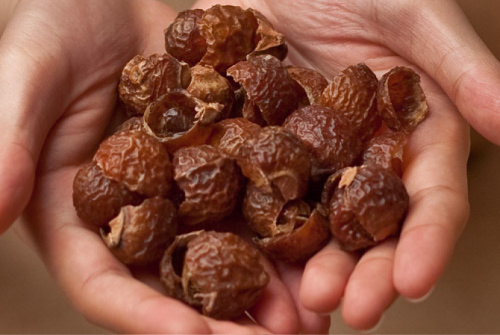
Our formulation combines soapnut with carefully selected botanicals including kaffir lime, elephant apple and Indian laurel leaf, together with our cold-fermentation process using effective microorganisms.
Most importantly for people specifically looking to avoid CAPB and coconut-derived ingredients:
Conscious Living Shampoo and Conditioner contain no cocamidopropyl betaine, no coco glucoside and no coconut-derived ingredients.
This doesn’t mean that one formulation will suit absolutely everyone. Skin sensitivities are individual, and any botanical ingredient can potentially cause a reaction in a susceptible person.
What we can do is be transparent about what goes into our products and why we use it.
Know What’s in the Bottle
If your scalp regularly becomes itchy, red or irritated, don’t assume that choosing the next product labelled “natural” or “sulphate-free” will necessarily solve the problem.
Instead, start looking more closely at the ingredient list.
CAPB is only one possible cause of scalp irritation, but for people with allergic contact sensitivity to it or its associated manufacturing impurities, recognising the ingredient can make a meaningful difference.
And if you don’t know where an ingredient comes from, ask the company that made the product.At Conscious Living, we believe consumers should be able to understand not only what is in the products they use every day, but also where those ingredients come from and why they are there.
If you’d like to know whether a particular ingredient is present in one of our formulations, simply contact us. We’re happy to tell you what’s inside.
References & Further Reading
- Jacob SE, Amini S. Cocamidopropyl betaine (Allergen of the Year 2004). Dermatitis.
- American Contact Dermatitis Society. Allergens of the Year 2000–2020. Dermatologic Clinics, 2020.
- Journal of the American Academy of Dermatology. Research concerning cocamidopropyl betaine-induced allergic contact dermatitis, 2018.
- DermNet. Contact Allergy to Cocamidopropyl Betaine.
- Walker MT et al. Allergens Responsible for Contact Allergy in Children From 2010 to 2024: A Systematic Review and Meta-Analysis.